
BRAND EXPERIENCE
CONSULTING
Helping premium businesses turn what their brand promises into what their clients consistently experience.

Growth should not dilute the character, care, and standards that made your business trusted in the first place. But as more people, processes, and decisions sit between you and the client, the experience can begin to feel less consistent, less intentional, and less like the business you built.
Fern & Stone helps premium businesses design how their brand promise is carried through the business—from first impression to delivery, referral, and repeat clients—so trust is built intentionally at every stage while preserving the character and care that set the business apart.

Growth has a way of exposing the gap
between intention & experience.
And, maybe you’ve noticed where it’s starting to show up:
Leadership is still the safety net.
Important communication, decisions, and client moments still need your oversight.
The handoff doesn’t match the sale.
A thoughtful, personal sales experience becomes a generic process once the work begins.
Clients are asking questions they shouldn’t have to ask.
What happens next? Who is my contact? Did you receive what I sent?
Referrals and repeat business are softening.
Clients may still be satisfied, but fewer are returning, referring, or talking specifically about what made the experience exceptional.
The experience depends on who is working.
Different team members give different answers, follow different processes, or deliver different levels of service.
Individually, these moments can seem small.
Together, they’re often a sign that growth is creating different versions of the same business, depending on who the client speaks with, where they are in the client journey, or how closely leadership is involved.
The business you’ve built,
working the way you intended.
Your team knows how to carry the standard.
They understand not only what to do, but how the experience should feel, giving them the confidence to make decisions without everything coming back to you.
Your clients feel considered at every step.
They spend less time chasing updates, repeating information, or figuring out what comes next. The business anticipates more, so the client has to carry less.
The experience becomes consistent without becoming generic.
Across people, departments, and locations, clients encounter the same level of care while the interactions themselves still feel personal and authentic to your brand.
Your time goes back to leading the business.
Fewer decisions need your approval. Fewer moments require your intervention. Fewer gaps need to be repaired after the fact.
The experience supports the value of your brand.
Clients have a reason to return, a story worth sharing, and an experience that makes the value behind your price easier to feel.
Growth stops threatening what made the business successful.
New hires, new leaders, and new locations can carry forward what once lived primarily in the instincts of a few people.
The experience you built becomes
one your entire organization can deliver.

Strategy is our foundation. Hospitality is our lens.

Fern & Stone helps premium businesses translate the promise of the brand into the way the business operates, communicates, makes decisions, and cares for people. We uncover where those elements are aligned, where they have begun to drift, and what needs to change without losing the character, care, and trust that made the business distinctive in the first place.
The client journey is one of the clearest places that alignment becomes visible. We look from first impression through delivery, referral, and repeat business to understand where the brand promise is being reinforced, where trust is being weakened, and where the client is carrying more than they should.
Then we help leadership make the experience intentional. That may mean clarifying the brand promise, strengthening handoffs, defining the standard, improving how information moves, or giving the team a clearer way to make decisions without everything coming back to leadership.
Hospitality gives us the lens for that work. Not hospitality as performance, but as the discipline of anticipating what someone needs, reducing unnecessary effort, and making people feel considered at every stage.
The goal is not to make the business more polished at the expense of what made it distinctive. It is to help the organization carry more of what already works, more consistently, as the business grows.
The result is a brand experience that feels distinctly yours, is reinforced by the business behind it, and can be carried consistently as the organization grows.

What We See Differently
We look between the touchpoints.
The transitions matter as much as the individual moments. Inquiry to sale. Sale to delivery. One person to the next. A handoff can work perfectly on paper and still leave a client wondering who is taking care of them now.
We use hospitality as a business discipline.
Not as a collection of elevated gestures, but as a way of anticipating needs, reducing what the client has to carry, and intentionally building trust throughout the relationship.
We protect what already works.
The goal is not to replace what made your business successful with someone else’s idea of a premium experience. You should come out of this more consistently yourselves, not less.
We build for the people who have to carry it forward.
Every recommendation has to work beyond the strategy room. We consider the person who has to make the decision, manage the handoff, or deliver the experience on an ordinary Tuesday.
And we work toward not being needed.
The goal is a leadership team that can see the standard, teach it, make decisions from it, and hold it steady without us in the room.
By the time a business finds Fern & Stone,
they have usually already made smart investments.
The brand has been refined.
The systems have been improved.
The surveys have been reviewed.
The team has been trained.
And yet, there is still a gap.
That’s because each of those disciplines answers an important question.
Branding defines what you say.
Operations determine how the business runs.
Customer feedback tells you what happened.
We look at the question that sits between them:
What should it feel like to be your client, and is your entire business consistently delivering it?
That question changes what we look for and how we work.
What the brand promises should be clear enough to guide decisions, be taught across the organization, and remain recognizable wherever someone encounters the business.
Where strategy, hospitality, and trust meet.
Fern & Stone grew from years spent at the intersection of strategy, systems, hospitality, and trust.

Over time, trust becomes loyalty. It gives clients a reason to return, to refer, and to continue choosing the brand even when other options exist.
That is why I see brand experience as more than the client journey. The client journey is one of the most visible places where the brand becomes real, but the experience is shaped by what sits behind it too: leadership decisions, team behavior, systems, standards, communication, and the choices a business makes about how it wants to show up.
That is the perspective I bring to Fern & Stone. I look at the brand strategically, operationally, and through the lens of hospitality, with equal attention to what needs to change and what deserves to be protected.
My background spans technical program management, luxury hospitality, private aviation, and building a hospitality business of my own. Different industries, but the same pattern kept appearing: a brand is not experienced through its message alone. It is experienced through the hundreds of decisions, handoffs, expectations, interactions, and details that show people whether the business is what it says it is.
I believe trust is built when the promise a brand makes is reinforced by how the business actually operates, communicates, and cares for people. Every time a company does what it said it would do, anticipates what matters, creates clarity, and delivers with consistency, that trust deepens.
WHO WE PARTNER WITH
Founders, CEOs, and small leadership teams of established premium businesses, typically ten to seventy-five people, where clients are making a high-consideration purchase and trust is part of what they are buying.
Boutique Hospitality
Private Membership Clubs
Concierge Practices
Fine Jewelry and Specialty Retail
Wellness and Private Healthcare
Retreat and Travel Businesses
Relationship-Driven Professional Services
The common thread is not the industry. It is a business where the stakes are personal, referrals and repeat business matter economically, and the brand promise, client experience, and way the business operates need to stay aligned as the company grows.
Often, leadership can feel that the experience is no longer keeping pace with the business, even when the brand itself remains strong.
Trust is built in the experience.
And it shows up in the business.
experience
experience
Consumers' trust in a brand was 5.1 times higher following a delightful experience than following an upsetting one.
Source: Qualtrics XM Institute, 2024
When what a brand promises and what the business delivers stay aligned, something valuable happens: clients learn they can trust you.
That trust is not simply a feeling.
It influences whether people choose you again, recommend you to someone else, remain loyal when alternatives appear, and believe the experience is worth the price.
PwC found consumers were willing to pay up to 16% more for products and services when the experience was better, with increased loyalty accompanying that premium.
Source: PwC, Future of Customer Experience
Edelman found that 55% of consumers were more likely to stay loyal to a brand they fully trust than one they do not. Another 53% were more likely to recommend the trusted brand.
Source: Edelman Trust Barometer, 2024
For a premium business, these are not separate ideas.
The promise creates an expectation. The business either reinforces or weakens that expectation through the way it operates, communicates, and delivers. Those experiences build trust over time, and trust gives clients a reason to stay, return, refer, and continue choosing the brand when other options exist.
That is why brand experience is not simply about making the journey feel better. It is about making sure the business is equipped to keep the promise the brand is making.
When that alignment is strong, the experience becomes part of the value of the brand itself.
The FERN & STONE Path
A deliberate path from promise to practice
We begin with what the brand intends to promise, then look at how that promise is actually being carried through the business.
From there, we help leadership decide what should be protected, what needs to change, and what will make the greatest difference to the brand, the client, and the business.
The work unfolds in three phases.
-
01 / ESTABLISH
Before we evaluate the experience, we establish what the business is trying to deliver.
We begin with the foundations already guiding the brand and determine what is clear, what needs sharpening, and what has never been made explicit.
The goal is not to rebuild what already works. It is to create enough clarity around the promise, the client, and the intended experience that the organization has something meaningful to measure against.
You leave this stage knowing what the brand is promising, to whom, and what that promise requires in practice.
02 / DIAGNOSE
Then we look at what the business is actually delivering.
We examine how the brand is experienced across the client relationship and the organization behind it, paying particular attention to the moments where trust is strengthened, weakened, or left to chance.
We compare the intended experience with the lived one so leadership can see where the promise is being carried out well, where it is beginning to drift, and what is creating that distance.
You leave this stage understanding what is working, where the experience is breaking down, and why.
03 / PRIORITIZE
Not every gap deserves the same attention.
We separate what should be protected from what should be strengthened, changed, added, or stopped, then determine which changes matter most and in what order.
The goal is not to give you an exhaustive list of everything that could be better. It is to give leadership a clear view of what deserves attention now.
You leave Phase One with a prioritized roadmap and a shared understanding of what comes next.
-
04 / IMPLEMENT
This is where the work leaves the strategy room and becomes part of how the business operates.
We help leadership translate the roadmap into changes the organization can actually carry. Depending on what the work uncovers, that might mean rethinking a part of the client journey, changing a policy or process, strengthening a handoff, refining communication, adjusting the systems or environments that shape the experience, or helping leaders and teams make decisions from a clearer shared standard.
The work may show up differently from one business to another. What matters is that the changes reinforce the promise of the brand and can be sustained by the people responsible for carrying it.
Our role is to guide, facilitate, and build capability, not to become the permanent owner of the experience.
The goal is for the brand promise to become something the organization can consistently deliver, not simply something a document describes.
-
05 / STEWARD
Because growth keeps changing the conditions around the experience.
A new location, a leadership transition, a pricing change, a new offer, or a larger team can all introduce new distance between the promise and the reality.
Stewardship gives leadership a way to revisit that alignment over time, notice drift early, and make thoughtful adjustments before the client is the one who reveals the gap.
The goal is an experience that remains worthy of the brand as the business evolves, with leadership able to recognize when alignment begins to drift and respond before that distance grows.
When the business delivers what the brand promises.
When the business is aligned, the brand promise is no longer an idea held by leadership or expressed through marketing. It becomes something people can recognize in the way the business actually operates and something clients consistently experience.
Leadership is aligned around what
the brand requires in practice.
There is a shared understanding of the promise, the experience the business is trying to create, and the standards that should guide decisions when the answer is not obvious.
Trust is built more consistently.
Clients have fewer reasons to chase, question, repeat, or recover from unnecessary friction. The business becomes better at doing what it said it would do and anticipating what matters along the way.s not.
The experience supports loyalty
and the value of the brand.
Clients have more reason to return, refer, and continue choosing the business because the experience reinforces the confidence and value that brought them there in the first place.
Your team can make stronger decisions without everything coming back to leadership.
People have enough clarity to recognize what fits the brand, what does not, and how to respond without needing a script for every situation.
The client experiences one business, not a collection of departments.
Handoffs are more intentional, communication is clearer, and the experience holds together across people, teams, locations, and stages of the relationship.
The brand promise becomes visible
in how the business operates.
Policies, processes, communication, environments, and everyday choices begin reinforcing the same experience the brand is promising from the outside.
Growth becomes easier to absorb without creating a different version of the brand.
New people, leaders, offerings, and locations can carry the business forward without relying on a small handful of people to preserve what makes it distinctive.
You know the business is aligned when the experience no longer depends on a few people to preserve what makes the business feel like itself.
I learned to pay attention to
what people shouldn’t have to carry.
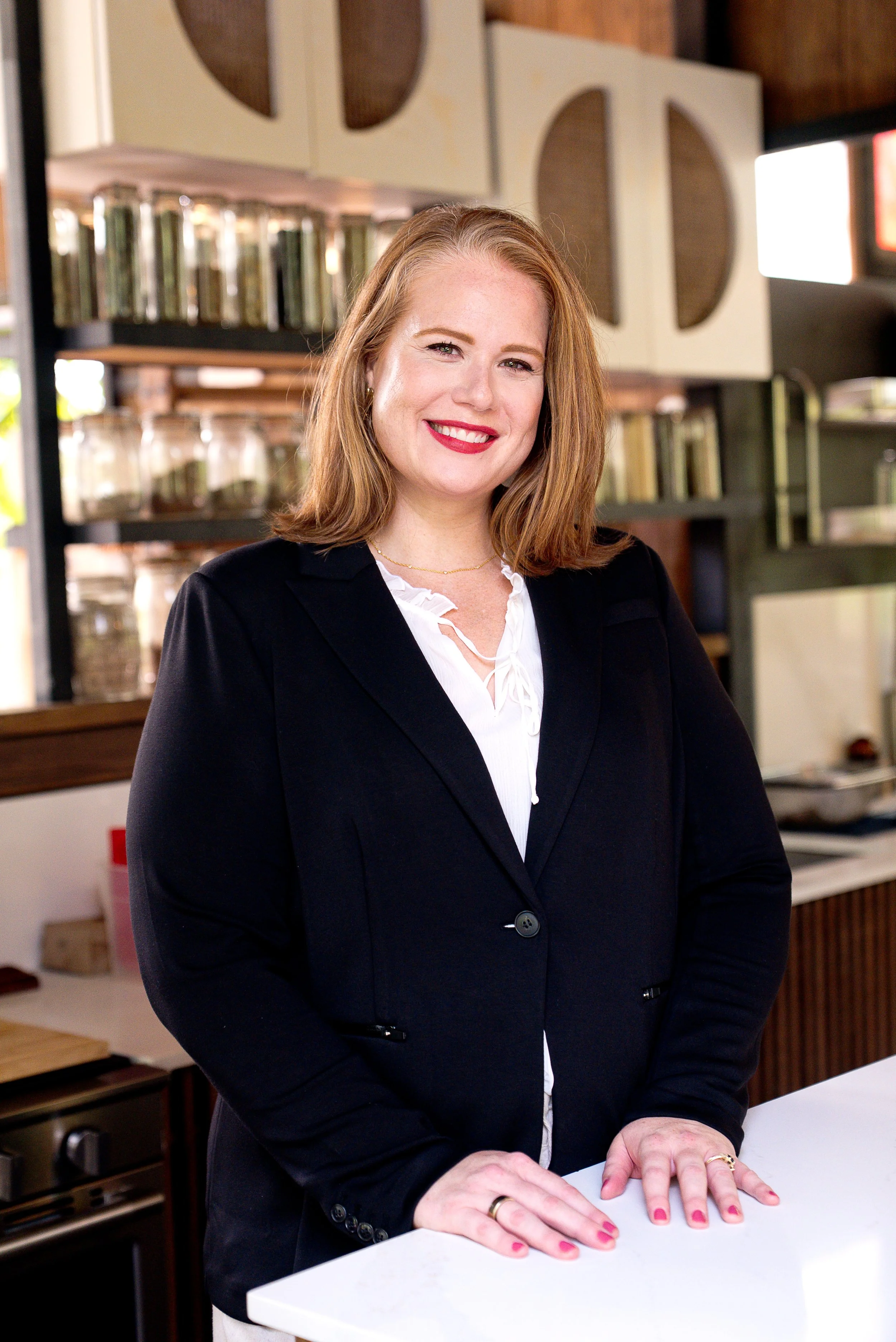
For as long as I can remember, I have noticed the moments that are easy to miss.
The point where excitement becomes uncertainty. The question someone hesitates to ask. The handoff that technically worked but somehow left a person feeling less cared for. The small detail that tells someone, often without words, whether anyone has really thought about what this experience is like for them.
Early in my career, I worked in technical program management, translating executive vision into products, systems, and services that people could actually use. I often sat between leadership, technical teams, and the end user, which taught me an important lesson very early: intention does not guarantee experience.
Something can make perfect sense inside a business and still feel confusing, fragmented, or burdensome to the person on the other side of it.
Years later, I carried that lesson into Southern with a French Twist, the luxury culinary gathering company I founded in Texas.
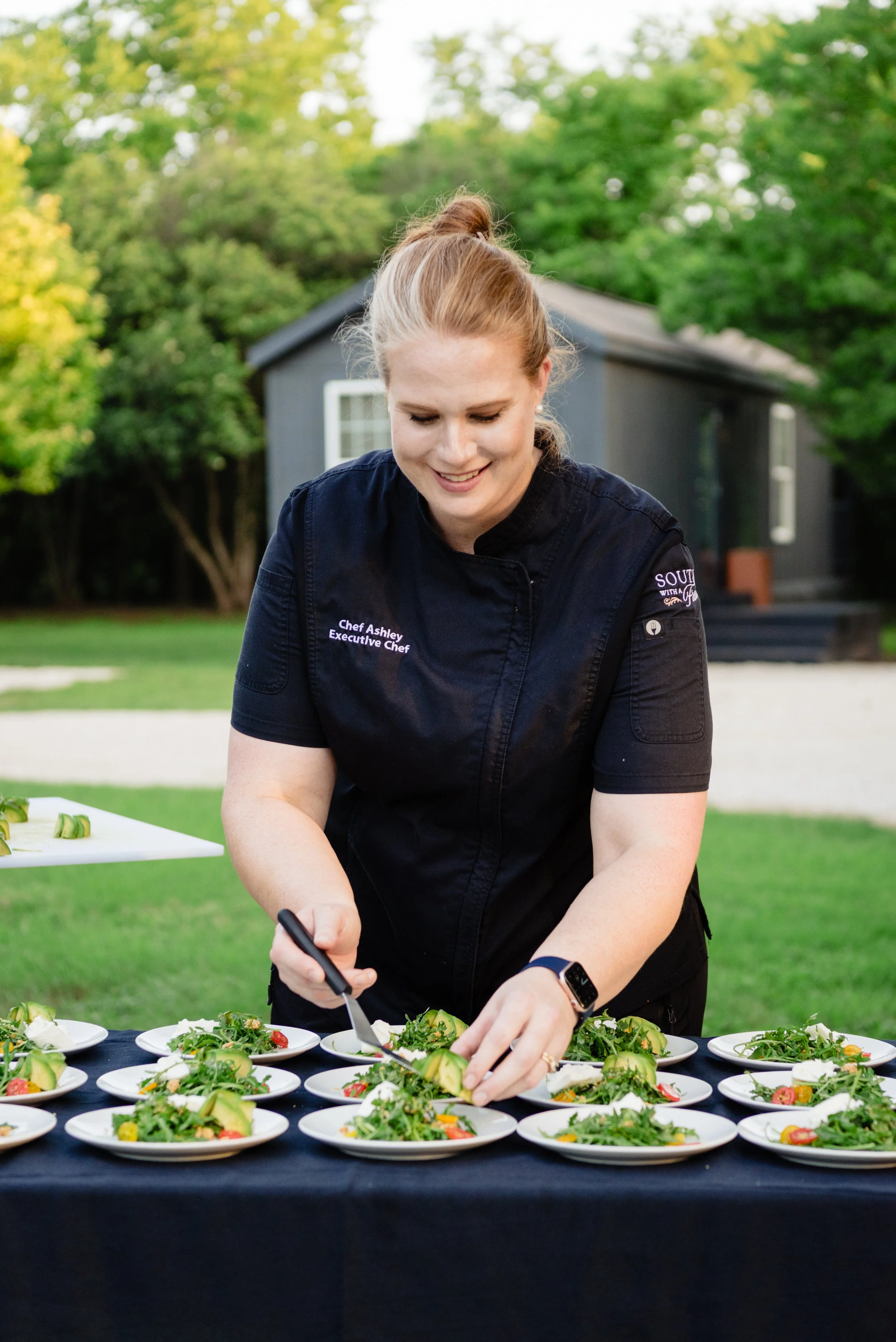
We created intimate dinners, private events, and high-touch hospitality experiences for clients who cared deeply about how their guests felt. The host was often preparing for a meaningful evening with people they loved, and our role went far beyond preparing the meal.
We were holding the evening on their behalf.
That meant thinking about what the host should never have to manage once their guests arrived.
The timing of each course.
Whether a glass needed refilling.
When the room needed to shift.
What could be cleared without interrupting conversation.
What information the host should never have to repeat.
What might make them glance toward the kitchen and wonder whether something had been forgotten.
The goal was for them to be fully present with their guests while we carried everything happening just outside their attention.
Over time, I realized that the most meaningful part of the experience was not the food itself.
It was the confidence our clients felt when they could stop monitoring the evening and trust that we were already thinking about what came next.
The meal was simply the vehicle.
Trust was the product.
That changed the way I understood hospitality.
Hospitality was not about adding more. It was about carrying more on someone else’s behalf.
It meant anticipating the questions they should not have to ask. Removing friction before it became noticeable. Protecting the transitions that could otherwise create uncertainty. Paying attention closely enough that the client could release some of their own attention.

The best version of the experience communicated something very simple:
We’ve thought of this.
You’re in good hands.
That same principle became even clearer through our work supporting private aviation, where we partnered with flight crews serving highly discerning travelers. The setting was different, but the expectation was familiar. Exceptional service was rarely about extravagance for its own sake. It was about discretion, anticipation, consistency, and delivering on what had been promised without requiring the client to think about everything happening behind the scenes.
Looking back, I could see the same thread running through each chapter of my work.
I had spent years paying attention to the space between what an organization intends and what a person actually experiences.
And I had learned that trust is often built there.
Fern & Stone grew from that understanding.
I believe the strongest brands make their promises tangible in hundreds of ordinary moments. The way a decision is made. The way information moves. The way a handoff is handled. The way someone is welcomed, reassured, remembered, or cared for without having to ask.
That is what I know how to see.
And it is what I help businesses learn how to carry.
Today, Fern & Stone applies that same way of thinking to premium businesses across industries.
Whether the setting is a boutique hotel, a private membership club, a significant purchase, or a high-trust professional relationship, the principle is the same:
Every interaction either strengthens trust or slowly erodes it.
That belief sits at the center of how we think about brand experience, and it shapes the philosophy and promises that guide our work.
The FERN & STONE Philosophy
What has been built with care should be changed with care.
Behind every premium brand is something someone cared enough to build. We believe that it deserves to be understood before it is optimized, protected before it is standardized, and strengthened without stripping away what made it worth choosing in the first place.
We raise the standard for how businesses care for people, so that the brands we interact with every day add more beauty, connection, and meaning to our lives.
The FERN & STONE Promise
What matters to you about your brand will matter to us, too.
We approach every engagement with the curiosity to understand what makes your business distinctly yours, the care to treat it thoughtfully, and the clarity to help you carry it forward.
You will feel considered in our work as you want your clients to feel in yours.
THE FIRST STEP
is a conversation
Our first conversation is a chance to talk through what you are noticing, what has changed as the business has grown, and what you are trying to protect as you decide what comes next.
I will ask questions, listen for the patterns underneath what you are seeing, and help determine whether Fern & Stone is well suited to help.
You do not have to decide anything on that call.
If the work is a fit, I will explain what I would recommend and why. If it is not the right work, the right time, or the right fit, I will tell you that too.
01 / SUBMIT AN INQUIRY
Tell us a little about your business, what you’re noticing, and what made this feel worth exploring now.
02 / HEAR DIRECTLY FROM US
We personally review every inquiry. If it looks like Fern & Stone may be able to help, you’ll receive a personal response with an invitation to schedule a conversation.
03/ DISCOVERY CALL
This complimentary conversation is an opportunity to understand what is happening in the business, why it matters now, and what you want to become true instead.
We’ll talk through the challenges you’re seeing, what may be sitting underneath them, whether Fern & Stone is equipped to help, and whether working together makes sense for both sides.
If it does, we’ll determine the appropriate scope for the initial diagnostic and walk you through what comes next.
FAQ’s
-
The word experience has largely been taken over by events. When people hear brand experience, they often picture an activation, a launch party, a pop up, something staged and temporary.
We work on the opposite of temporary. Brand experience is how the promise and character of a brand become tangible in the way the business operates, communicates, makes decisions, and interacts with people. The client journey is one place that experience becomes visible.
-
Brand strategy clarifies what the brand stands for and promises. Operations consulting focuses on how the business functions. Customer service training builds specific service skills. Fern & Stone works across the space between them. We translate the promise of the brand into how the business operates, communicates, makes decisions, and delivers, then identify where those pieces are aligned and where they are pulling apart.
Sometimes the answer touches your brand. Sometimes it touches operations. Sometimes it touches training. We follow the diagnosis wherever it leads, rather than assuming the fix belongs to any one department before we have looked closely.
-
We work with established premium businesses where clients are making a high-consideration purchase and trust is part of what they are buying.
The common thread is not the industry. It is a business where the stakes are personal, referrals and repeat business matter economically, and the brand promise, client experience, and way the business operates need to stay aligned as the company grows.
That may include boutique hospitality, private membership clubs, concierge practices, fine jewelry and specialty retail, wellness and private healthcare, retreat and travel businesses, and relationship-driven professional services.
We call our lens hospitality, and we mean something more specific than the industry. To us, hospitality is the discipline of anticipating what someone needs, reducing what they have to carry, and making them feel considered throughout the relationship.
It is a way of building trust, regardless of the industry.
-
You need an established business. You do not need finished brand foundations.
Plenty of companies arrive with a strong reputation and no written brand promise, no defined ideal client, and values that were set years ago and never revisited. That is normal, and it is part of what the first stage is for. A readiness assessment tells us whether your foundations are built, need sharpening, or were never written down, and we only build what is actually missing.
What we do need is a business with real clients, real demand, and enough complexity that the experience has started to vary. There is nothing to diagnose in a company that has not been delivering long enough to drift.
-
Sometimes. Many of our clients have already tried. What usually stops them isn't effort or intelligence. It's proximity.
You are too close to your own business to see it the way a client does. You know what you intended the experience to be, which makes it genuinely hard to notice where it's actually falling short, because you fill in the gaps automatically without realizing you're doing it.
An outside perspective sees what's actually happening rather than what's supposed to be happening. You don't need to work harder at this. You need to see it from where your client is standing.
-
We think about it the same way you do: what is inconsistency already costing you, and what would it be worth to close that gap.
A weaker handoff, a client who has to repeat themselves, a location that delivers a diminished version of your brand: none of that shows up as a single dramatic loss. It shows up in softer referrals, price resistance, a renewal that doesn't happen, a founder who still can't fully step back. Those are real costs, even when they are quiet ones.
Before we recommend anything, we help you see where those costs actually live in your business, so the investment is measured against something specific, not an abstract idea of what "better" might be worth.
-
We do not publish a figure, because the right scope genuinely differs from one business to the next.
What shapes it: the size of your company, how many lines of service you offer, how many locations or teams touch the client, and how much of the foundational work already exists. A business with solid foundations needs less building than one starting from nothing.
What is fair to say is that this is a meaningful investment, made by established companies with enough at stake in the client relationship that improving it is worth real money. If you are weighing it, the most useful thing to do before you call is to look at what inconsistency is already costing you. What you discount across a year, and what share of your revenue comes from clients who return or refer.
We scope after a discovery conversation. You will have a number well before you are asked to decide anything.
-
The work follows three phases. Phase One establishes the foundation, diagnoses where the promise and lived experience have drifted, and gives leadership a prioritized roadmap. Phase Two supports implementation of the changes that matter most. Phase Three provides ongoing stewardship as the business evolves.
-
Yes, and we expect to.
We are not replacing anyone. Your brand agency, your designers, your marketing team, and your operations people all keep doing what they do. What tends to be missing is a shared definition of what a client should experience, which is what everyone's separate work is supposed to add up to.
Once that exists, those relationships usually get easier rather than harder. Your vendors get a clear standard to work against instead of guessing at it, and your internal team finally has language for what they are asking for.
In practice, your leadership team does the deciding, your internal people and vendors do the building, and we guide and facilitate. We do not take over anyone's scope.
-
Yes. We are based in Austin and work across the United States, and we take international engagements as well. Travel is agreed as part of the proposal, so it is settled upfront rather than appearing later.
-
Both, and the mix is decided with you.
Some parts of this work benefit from being in the room and some do not. Where your team is based, how spread out they are, and what the engagement actually needs all shape it. We settle that together during scoping rather than applying the same pattern to every client.
The diagnostic usually benefits from time on site, because some of what we are looking for only shows itself when you watch it happen.
BEGIN THE CONVERSATION
If you're interested in working with us, please complete the form.
We read every inquiry personally, and we'll be in touch within 2 business days to talk through what you're noticing in your business and whether we're the right fit to help.